|
|||||||
|
|
Rennes-le-Château.
 Rennes-le-Château
is a small village perched on a hilltop near St-Ferriol. It has
become world famous in the last few years following the publication
of a series of books dealing with a mystery concerning a nineteenth
century priest who lived in the village. At the heart of the mystery
is the fact that the priest (abbé Bérenger Saunière) suddenly become
immensly rich during the 1880s. There are a few interesting aspects
of the mystery, such as where his money came from, but improbable
theories have been built on a few known facts and shorn up by mass
of demonstrable falsehoods. Over the last twenty years a series
of best-selling books have been published, each proposing a more
fantastic theory than its predecessors. Saunier probably made his
money by robbing ancient graves. (One of the few reliable facts
about Rennes-le-Château is that it was once a large Visigothic city
with a population of 20,000 or even 30,000, so it is is not impossible
that he found a trove of treasure, perhaps while restoring his Church).
Much more popular theories are that he: Rennes-le-Château
is a small village perched on a hilltop near St-Ferriol. It has
become world famous in the last few years following the publication
of a series of books dealing with a mystery concerning a nineteenth
century priest who lived in the village. At the heart of the mystery
is the fact that the priest (abbé Bérenger Saunière) suddenly become
immensly rich during the 1880s. There are a few interesting aspects
of the mystery, such as where his money came from, but improbable
theories have been built on a few known facts and shorn up by mass
of demonstrable falsehoods. Over the last twenty years a series
of best-selling books have been published, each proposing a more
fantastic theory than its predecessors. Saunier probably made his
money by robbing ancient graves. (One of the few reliable facts
about Rennes-le-Château is that it was once a large Visigothic city
with a population of 20,000 or even 30,000, so it is is not impossible
that he found a trove of treasure, perhaps while restoring his Church).
Much more popular theories are that he:
Eating and Drinking.
 The Languedoc and nearby Roussillon produce many regional specialities.
A Among them starters - Entrées - like Aligot, Cargolada, Escargots
Catalans, Olives, Saucisse de Toulouse à la languedocienne, Hammon;
Mushrooms - Champignons: Cèpes and giroles mushrooms; Fish & Sea
Food - Poisson & Fruits de Mer: Ancovies, Anchoïade, Oysters, Brandade
de Nîmes, Bourride de Séte, Gigot de mer à la palavasienne, Encornets
farcis, Local Seafood Platters, Tielle, Tellines, Ttoro; Main Course
- Plats Principals: Camargue beef, Ollada, or ouillade, Gardiane,
Cassoulet, Lamb 'sous la mère', Boles de picolat; Vegetables: Asparagus,
Pardailhan turnips, Camargue Rice, Sweet onions of Languedoc; Cheeses
- Fromages: Crotin de Chèvre. Roquefort. Pélardon. Perail. Tielle.
Tomme de Lozère and Tommedes Pyrénées. Fruit: Red apricots from
Roussillon, Almonds, Cherries from Céret, Figs, Peaches from Roussillon,
Pears from Conflent, Pippins from Le Vigan, Grapes from Clermont-Hérault;
Puddings - Desserts: Berlingots de Pézénas - boiled sweets, Rousquilles,
Oreillettes, Limoux nougat, Villaret croquants.
The Languedoc and nearby Roussillon produce many regional specialities.
A Among them starters - Entrées - like Aligot, Cargolada, Escargots
Catalans, Olives, Saucisse de Toulouse à la languedocienne, Hammon;
Mushrooms - Champignons: Cèpes and giroles mushrooms; Fish & Sea
Food - Poisson & Fruits de Mer: Ancovies, Anchoïade, Oysters, Brandade
de Nîmes, Bourride de Séte, Gigot de mer à la palavasienne, Encornets
farcis, Local Seafood Platters, Tielle, Tellines, Ttoro; Main Course
- Plats Principals: Camargue beef, Ollada, or ouillade, Gardiane,
Cassoulet, Lamb 'sous la mère', Boles de picolat; Vegetables: Asparagus,
Pardailhan turnips, Camargue Rice, Sweet onions of Languedoc; Cheeses
- Fromages: Crotin de Chèvre. Roquefort. Pélardon. Perail. Tielle.
Tomme de Lozère and Tommedes Pyrénées. Fruit: Red apricots from
Roussillon, Almonds, Cherries from Céret, Figs, Peaches from Roussillon,
Pears from Conflent, Pippins from Le Vigan, Grapes from Clermont-Hérault;
Puddings - Desserts: Berlingots de Pézénas - boiled sweets, Rousquilles,
Oreillettes, Limoux nougat, Villaret croquants.Local wines worth investigating include Blanquette de Limoux, a white sparkling wine; Fitou a rich red from the nearby Corbières; Maury, a sweet white wine drunk as an aperitif, and to the north the famous red wines of the Minervois. Cultural Events.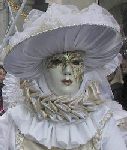
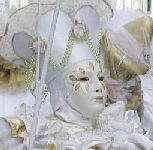 The nearest large town, Limoux has a unique winter carnival - the
longest fête in the whole of France, stretching from January
until Easter. It is not really a carnival in the true sense, rather
an adapted festival probably dating from pre Christian times.
The nearest large town, Limoux has a unique winter carnival - the
longest fête in the whole of France, stretching from January
until Easter. It is not really a carnival in the true sense, rather
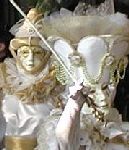
an adapted festival probably dating from pre Christian times.  In the local language it is called "fecos" - you can see pictures
of participants above right.
In the local language it is called "fecos" - you can see pictures
of participants above right.Every Summer the whole area comes alive with village festivals, including a world class festival of folk dance, while Carcassonne offers a programme of concerts and theatre in its spectacular open air theatre. Water Sports.
 In the nearby River Aude, you can watch white-water rafting - the
national chamionships are sometimes held here. You can also try
it yourself. Alternatively you can try canoing or kyacking in the
quieter stretches, or canyoning further into the mountains. You
can swim in smaller rivers - or at thermal springs. Further north
you can take trips down the Canal du Midi which joins the Mediteranean
Sea to the Atlantic Ocean. Built in the seventeenth century it is
an extraordinary feat of engineering, and listed as a World Heritage
site.
In the nearby River Aude, you can watch white-water rafting - the
national chamionships are sometimes held here. You can also try
it yourself. Alternatively you can try canoing or kyacking in the
quieter stretches, or canyoning further into the mountains. You
can swim in smaller rivers - or at thermal springs. Further north
you can take trips down the Canal du Midi which joins the Mediteranean
Sea to the Atlantic Ocean. Built in the seventeenth century it is
an extraordinary feat of engineering, and listed as a World Heritage
site. 
 On the coast you can sail, wind surf, and SCUBA dive. You can also
water ski in the Mediterranean sea, or in etangs (salt lakes) or
inland in fresh water lakes.
On the coast you can sail, wind surf, and SCUBA dive. You can also
water ski in the Mediterranean sea, or in etangs (salt lakes) or
inland in fresh water lakes. Winter Sports.

 Winter sports in the nearby Pyrenees include downhill skiing and
snowboarding, cross-country skiing (ski du fond) and dog sledding.
There are four good sized resorts around one hour's drive away -
Les Angles, Font Romeau, Ax-les-Thermes and Andorra.
Winter sports in the nearby Pyrenees include downhill skiing and
snowboarding, cross-country skiing (ski du fond) and dog sledding.
There are four good sized resorts around one hour's drive away -
Les Angles, Font Romeau, Ax-les-Thermes and Andorra. Beaches.
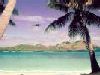 St-Ferriol is within easy reach of the Mediterranean coast - including
sandy beaches, naturist resorts, fishing ports and étangs.
St-Ferriol is within easy reach of the Mediterranean coast - including
sandy beaches, naturist resorts, fishing ports and étangs.
Wildlife.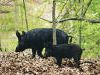 The
area boasts a rich and varied wildlife including wild deer and boar,
exotic birds, and more twice as many plant species as are found
in the UK, including over eighty types of orchid.
The
area boasts a rich and varied wildlife including wild deer and boar,
exotic birds, and more twice as many plant species as are found
in the UK, including over eighty types of orchid. Wildlife in the languedoc includes a wide range of mammals (including deer, large long-horned sheep, Pyrenean fawns, brown bears, wolves, bison, beavers, wild boar, otters), birds (including vultures, grouse, woodpeckers, and owls), reptiles, amphibians and fish; flowers, herbs, and trees; and mushrooms (including truffles and many other edible fungi). You can find most of them in the wilder parts of the region, but it is generally easier to find them in wildlife reserves and National Parks. See for example: The Cévennes National Park, a spectacular National park, declared a "World Biosphere Reserve" by UNESCO in 1985. It stretches across three Departements (54 % in Lozère, 36% in Gard and 10% in Ardèche). In altitude it rises from 378 to 1,699 metres above sea level. The park welcomes 800,000 visitors each year. Les Angles Wildlife Park is a wildlife park in the Pyrenees where the animals live in relative freedom. Most of them are native to the Pyrenees - stags, roe deer, mouflons (large long-horned sheep) izards (Pyrenean fawns), brown bears, wolves and bison. Two trails, accessible in winter by snow shoe, enable you to see the different species. There are also panoramic viewpoints over the forests and lakes of the Capcir. The park covers an area of about 90 acres at an altitude of 1800m.
|
||||||

|
|||||||
| • CSF • Web Links • Contact by e-mail • | |||||||



 Paragliding, hang-gliding and hot-air ballooning are all practiced
locally.
Paragliding, hang-gliding and hot-air ballooning are all practiced
locally. 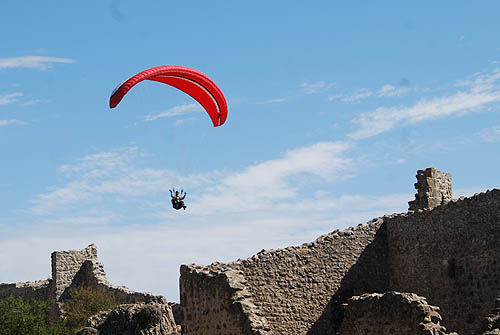
 .
.